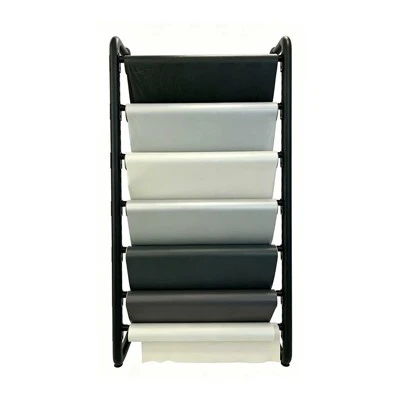
The design principle of light-blocking black films relies primarily on mechanisms of light absorption and obstruction. By incorporating high concentrations of carbon black or other dark-colored functional fillers into a polymer matrix, incident light is largely absorbed and converted into thermal energy upon entering the film, thereby significantly reducing the intensity of transmitted light. This high light-absorption capability forms the basis for achieving complete or near-complete light-blocking effects.
At the microstructural level, these films enhance optical path loss through the uniform dispersion of fillers within the matrix. As light enters the material, it undergoes multiple scattering and absorption events at the interfaces between the filler particles and the polymer; this continuously extends the light's propagation path, ultimately preventing the majority of light energy from passing through the film and resulting in a stable light-blocking effect. Consequently, factors such as filler particle size, dispersion uniformity, and the loading ratio directly influence the film's light-blocking performance.
In terms of structural design, some light-blocking black films utilize a multi-layer co-extrusion process to further enhance performance through the functional specialization of each layer. For instance, the outer layer may be designed to improve weather resistance and mechanical strength, the middle layer handles the primary light-blocking function, and the inner layer optimizes heat-sealing or processing characteristics. Such structural optimization not only boosts light-blocking efficiency but also improves the film's stability and adaptability across various application environments.